Tagged: CMS 12

Optimizely CMS 13 Upgrade Overview

Wondering how to upgrade from Optimizely CMS 12 to 13? Not sure where to start – you are not alone. 

Here is a quick overview of the key architectural changes that need to be addressed.

Key Architecture Changes

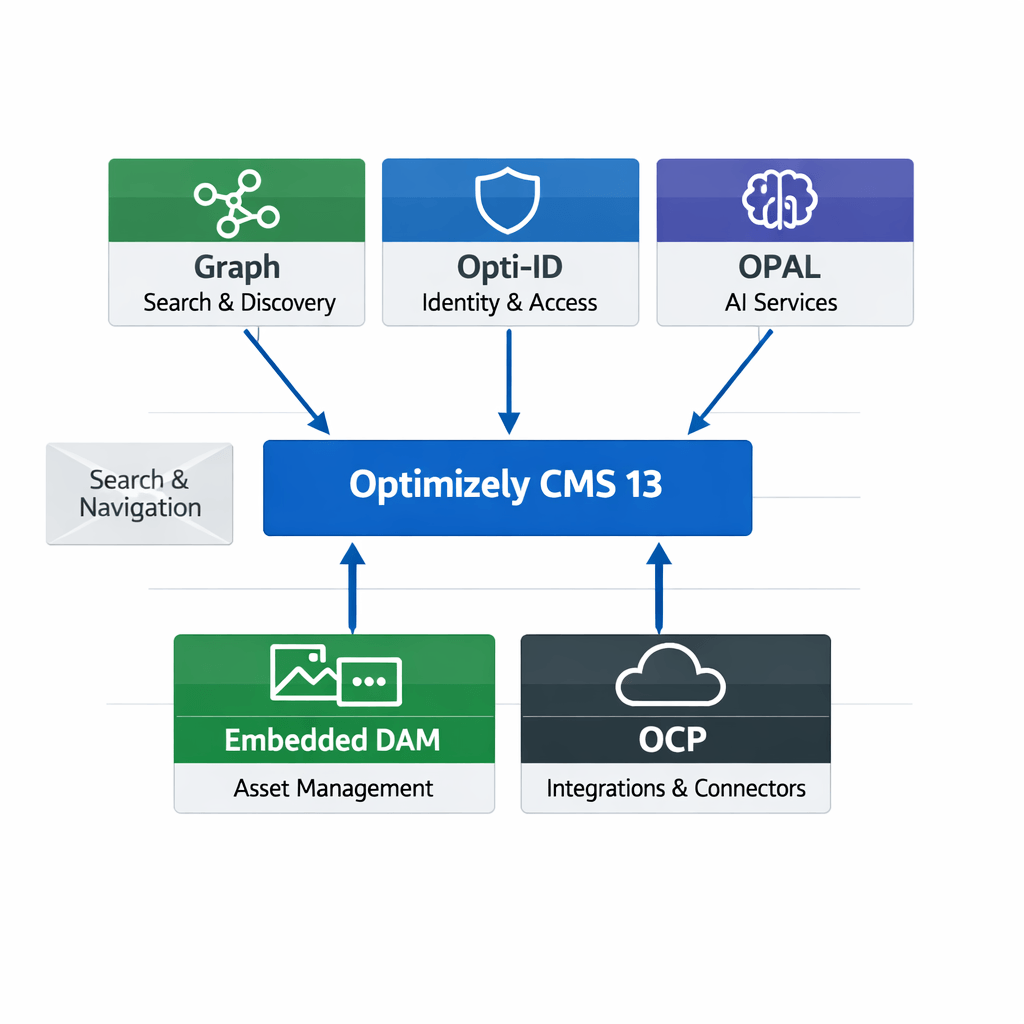
  1. No Search and Navigation
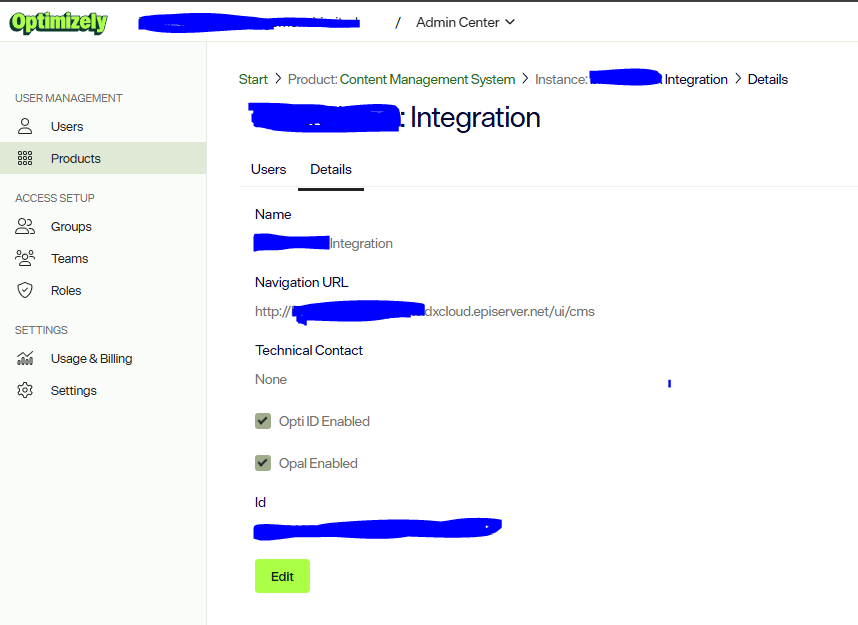
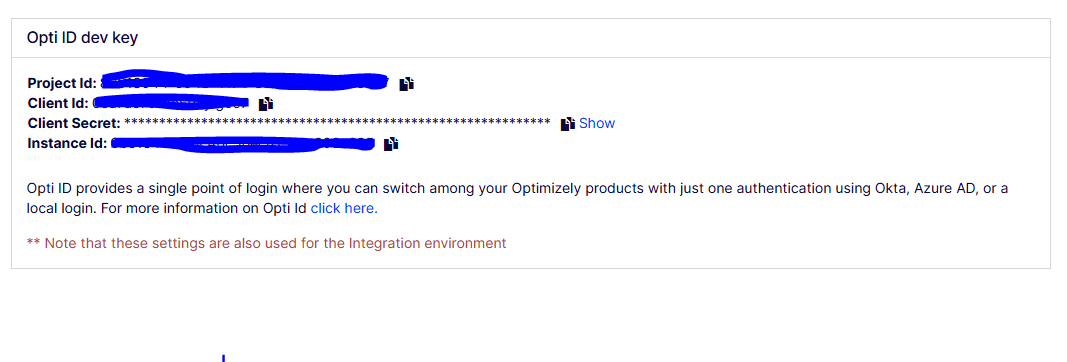
  2. Opti-ID for Identity
  3. Graph for Search and Discovery
  4.  Embedded DAM
  5. OCP for Integrations
  6. OPAL for AI

Optimizely CMS 13


🟩Graph — Search & Discovery

  • Provides unified content search across structured and unstructured data.

  • Enables semantic relationships between content items.

  • Powers personalized discovery experiences through relevance scoring and taxonomy mapping.

  • Integrates with Optimizely’s indexing layer for fast retrieval and filtering.

🟦Opti‑ID — Identity & Access

  • Centralized identity provider for user authentication and authorization.

  • Supports SSO, OAuth 2.0, and enterprise federation (e.g., Azure AD, Okta).

  • Manages user roles, permissions, and attribute mapping across CMS modules.

  • Ensures secure access control for editors, marketers, and external systems.

🟪OPAL — AI Services

  • Provides AI‑driven content recommendations and predictive analytics.

  • Automates tagging, summarization, and personalization workflows.

  • Integrates with external AI APIs for language and vision tasks.

  • Enhances editorial efficiency through intelligent suggestions and insights.

🟩Embedded DAM — Asset Management

  • Manages digital assets (images, videos, documents) directly within CMS.

  • Supports versioning, metadata tagging, and rights management.

  • Enables seamless asset reuse across pages and campaigns.

  • Connects to external storage or CDN for optimized delivery.

⬛OCP — Integrations & Connectors

  • Provides an integration framework for third‑party systems (CRM, ERP, marketing tools).

  • Uses REST APIs and webhooks for data synchronization.

  • Supports modular connectors for commerce, analytics, and automation.

  • Ensures scalable interoperability across enterprise ecosystems.

Hope this helps.

Happy Optimizing!
 

0

Automating Cleanup Tasks with Optimizely Scheduled Jobs

Scheduled jobs in Optimizely CMS are a powerful way to automate any background tasks like content cleanup, indexing, or reporting.

I created a simple scheduled job to delete the expired content.

Let’s get started.

Step 1: Create the Job Class

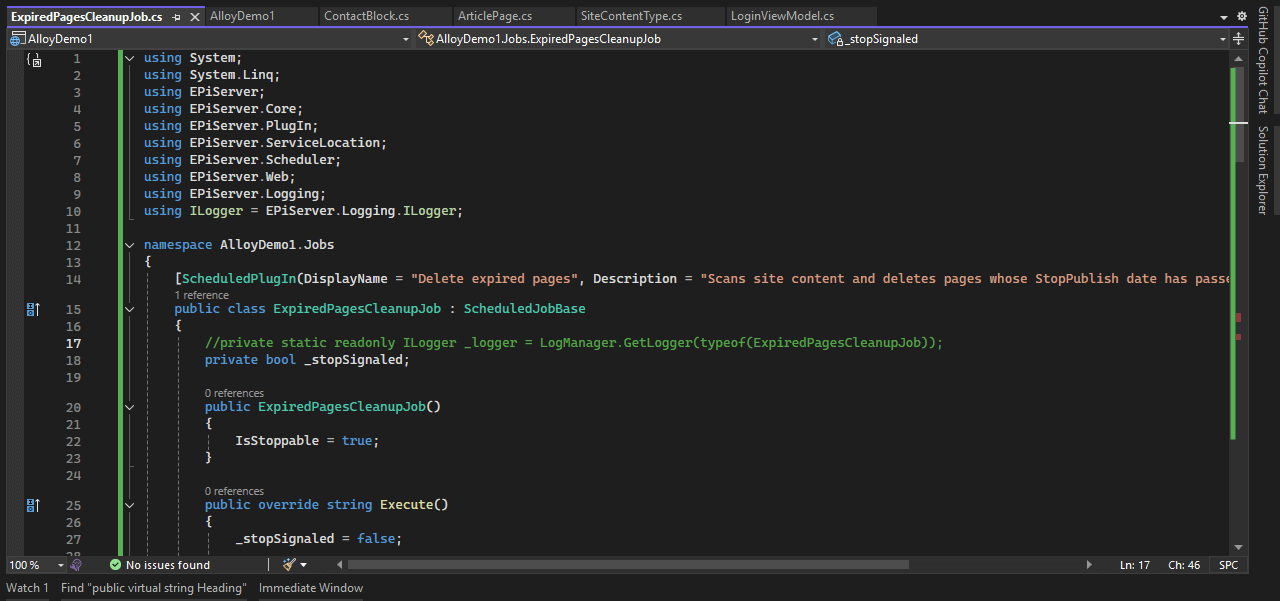
  • Created a job called ExpiredPagesCleanupJob.cs that inherits the ScheduledJobBase class.
  • Implement logger as needed, currently commented out in code.
  • Rebuild and deploy the solution.

Step 2: Run the job

  • Wondering, don’t I need to register the job in Optimizely CMS? No need, it automatically registers the job using the [ScheduledPlugin] attribute.

Optimizely-CMS-Scheduled-Job-1.png

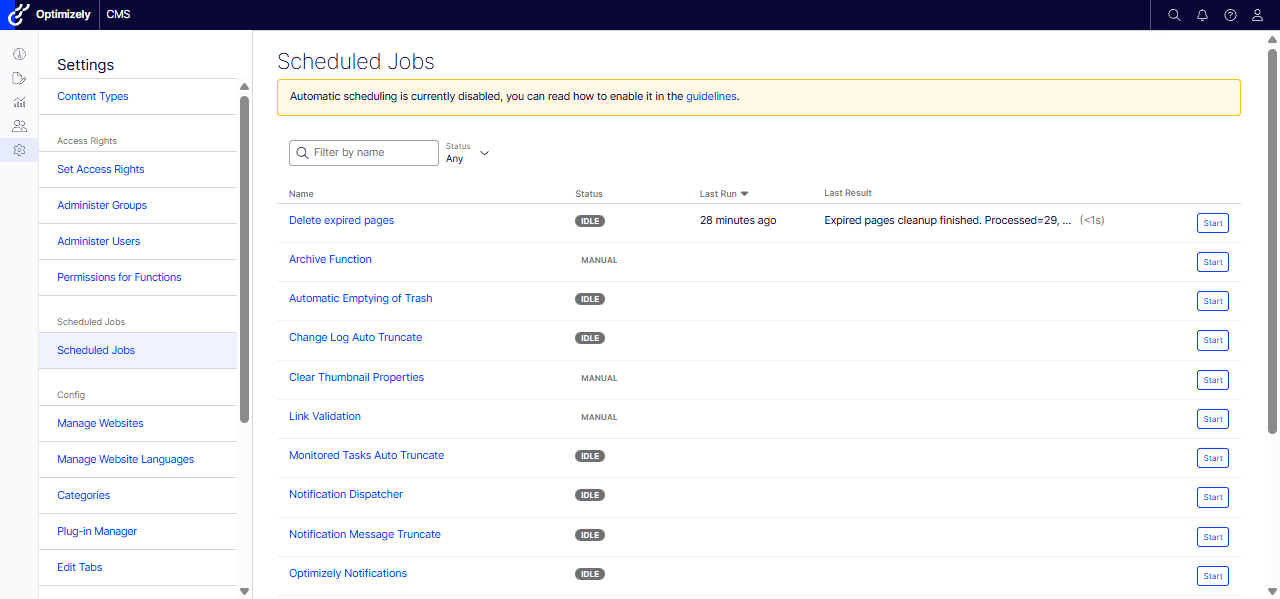
  • Let’s navigate to Settings -> Scheduled Jobs
  • Now you will see the job listed and ready to be started.

Optimizely-CMS-Scheduled-Job-2.png

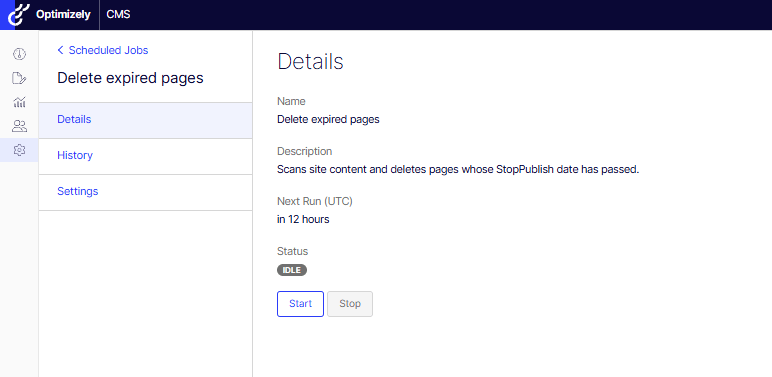
  • Let’s start the job manually for now.

Optimizely-CMS-Scheduled-Job-3.png

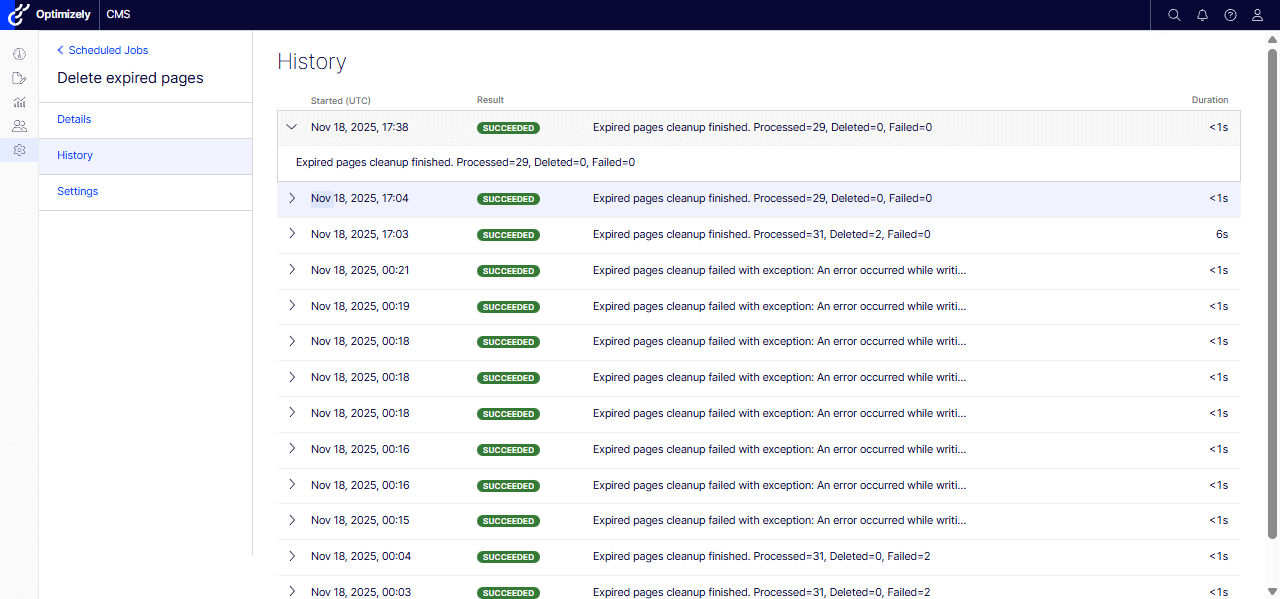
  • History shows whether the job has succeeded or not.

Optimizely-CMS-Scheduled-Job-4.png

  • Before running the job, the Expired Page report showed that two content pages had expired.

Optimizely-CMS-Scheduled-Job-5.png

  • Now let’s check the reporting results again. yay! It’s successfully deleted!

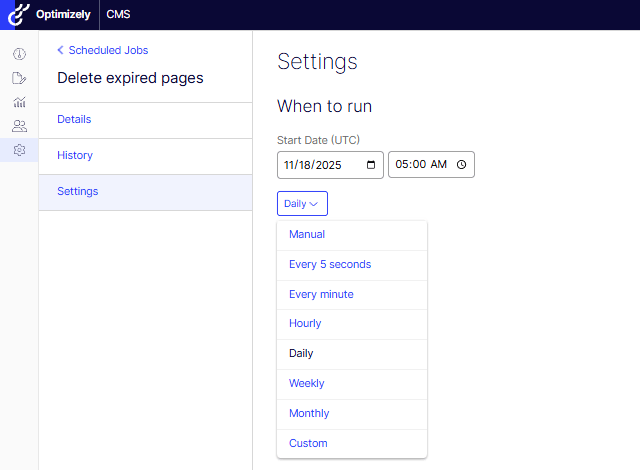
  • You can schedule the job every 5 seconds, minutes, hourly, and so on.

If you prefer watching a video, my quick recording –

Hope this helps.

Happy Optimizing!
0

Optimizely SaaS CMS Developer Certification

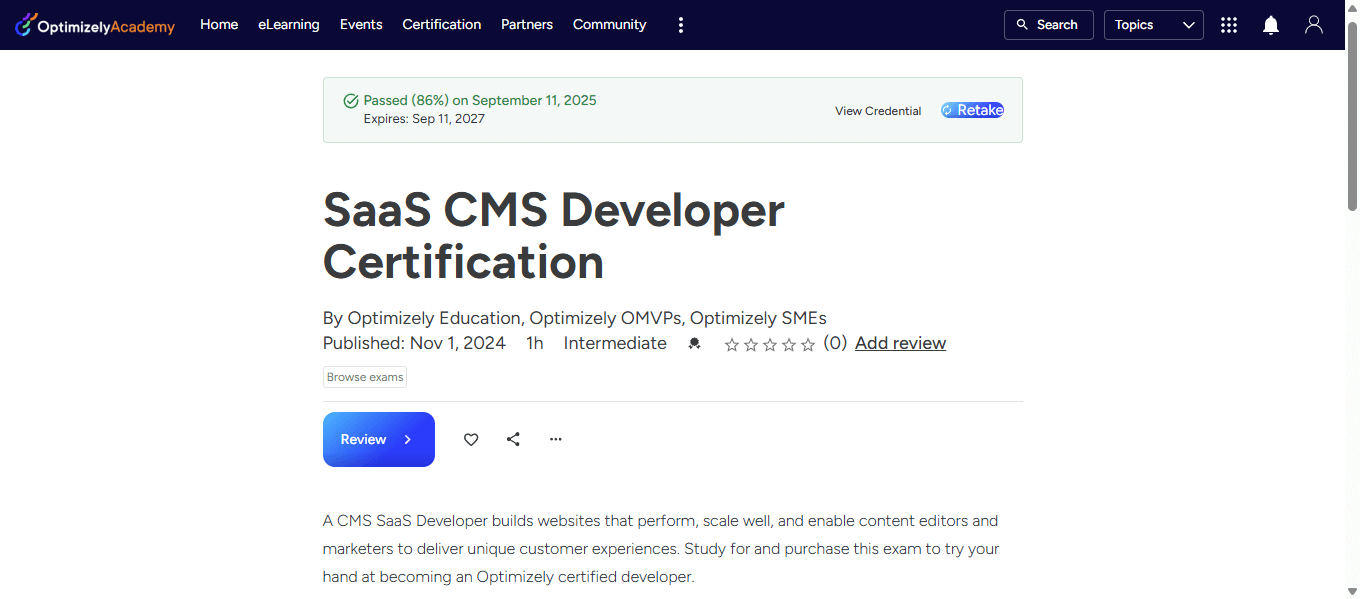
I have recently passed the Optimizely SaaS CMS Developer Certification. Sharing my experience, hope this helps.

https://academy.optimizely.com/student/activity/2181428-saas-cms-developer-certification?sid=b1c2cf21-e438-4a16-8832-c165d1724844&sid_i=2

Let’s get started.

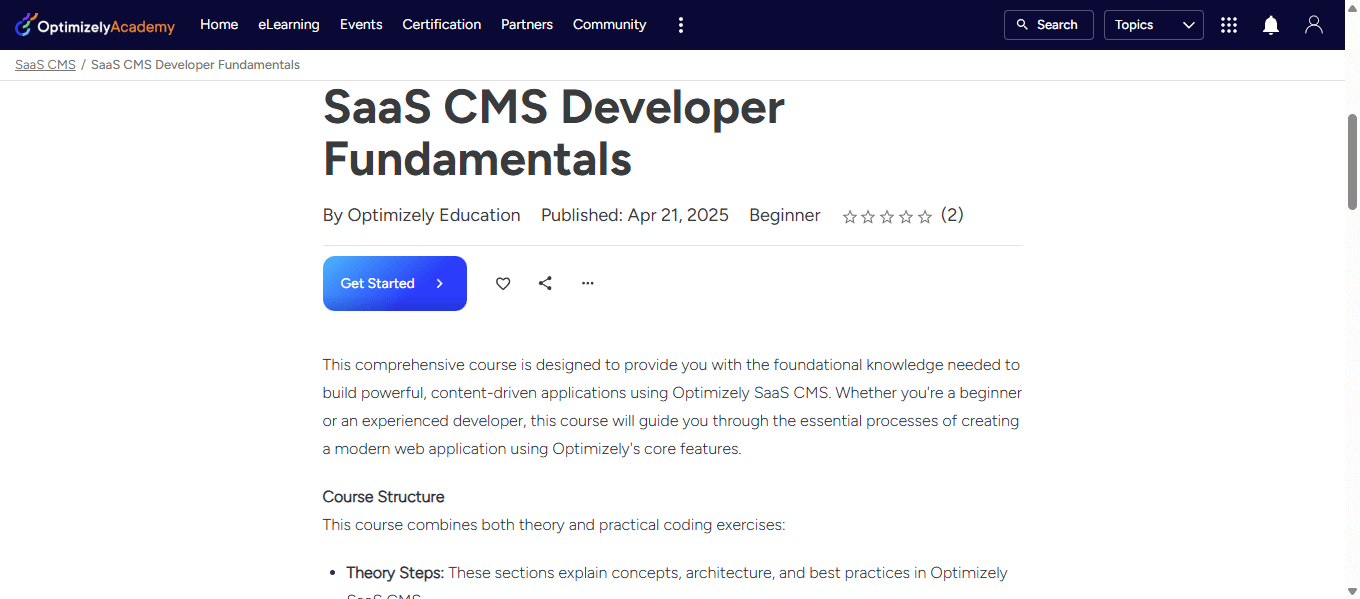
  • To prepare for the exam, I started with Optimizely Academy’s SaaS CMS Fundamentals and went through all the modules.

 https://academy.optimizely.com/student/collection/1405874/path/4062729


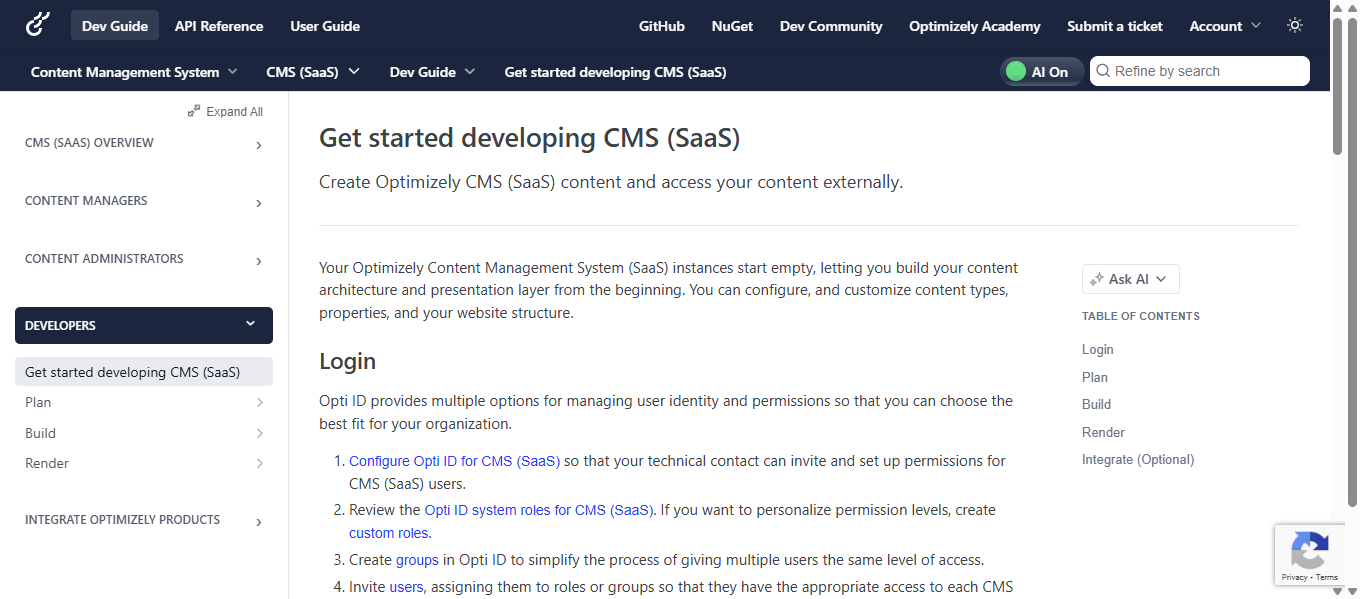
  • The developer documentation helps to revise the concepts.

Optimizely Developer Documentation

Optimizely-SaaS-CMS-Developer-Exam-4.png

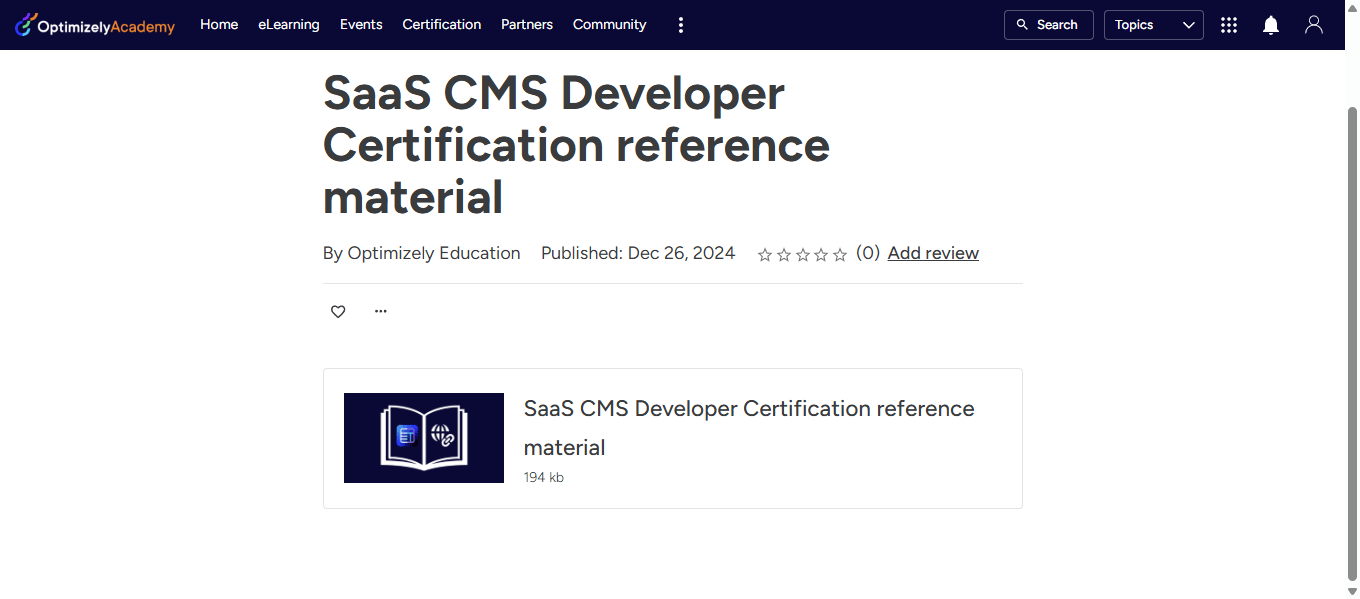
  • The complete SaaS CMS Developer Certification reference material

https://academy.optimizely.com/student/activity/2408711-saas-cms-developer-core-competency-certification-reference-material

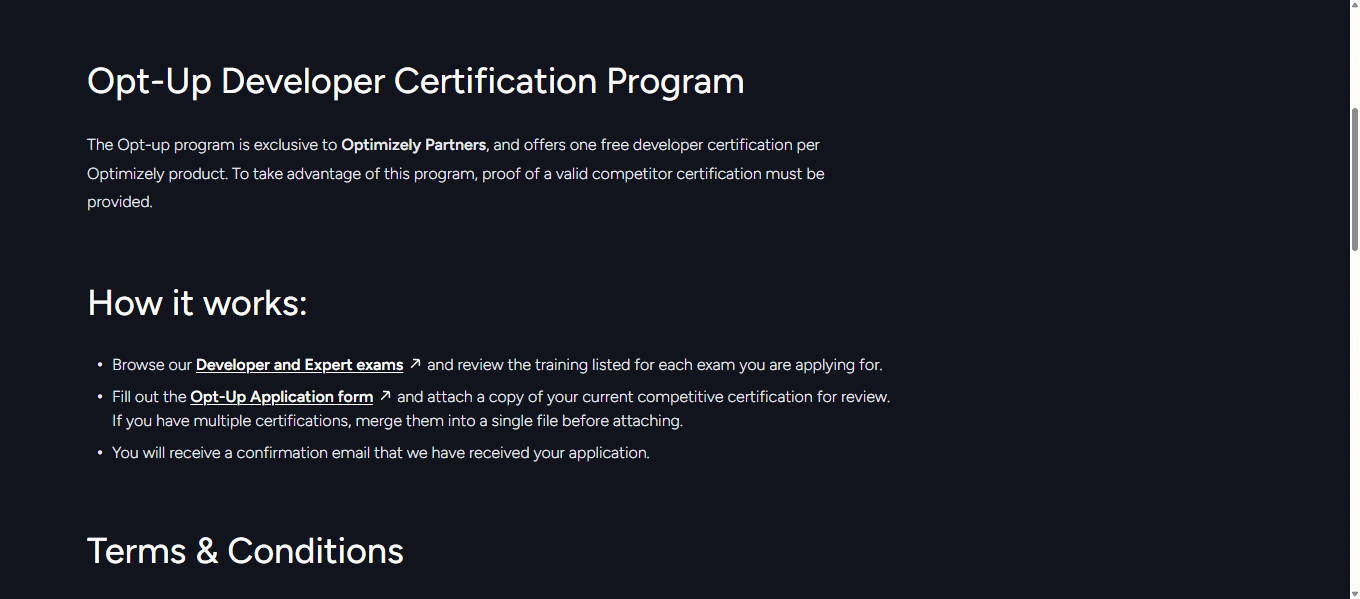
  • When you’re ready for the exam, you can purchase the exam voucher code for $300. Alternatively, if your company is an Optimizely partner and you have competitor certification, fill out the Opt-up program to receive a free voucher code.

https://www.optimizely.com/support/education/opt-up-training-certification-program/

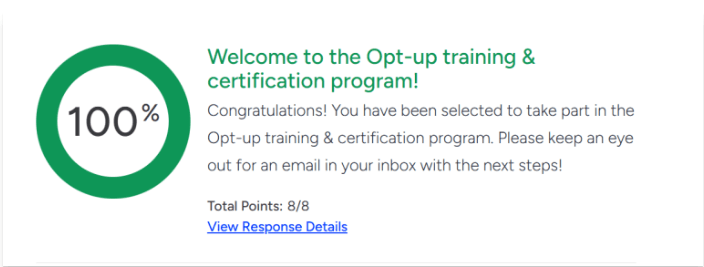
  • After submission, they confirm the eligibility within 7 business days in email.

Optimizely-SaaS-CMS-Developer-Exam.png

  • Once the voucher code is redeemed, you need to take the exam within 14 days. No scheduling the exam is needed, you can take exam anytime.

Exam Questions: 50 multiple-choice questions

Duration: 60 minutes

Pass Score: 85% (43 questions need to be correct)

Note: In case of exam failure, you can retake the exam after 24 hours!

After passing, Credly will send an email notification, and the certification is valid for 2 good years.

If you prefer watching a video, my quick recording –

Happy Optimizing!
0

Optimizely : Fast Installation on Local Machine

I have been exploring Optimizely and installed CMS 12 on my local machine pretty quickly using the NuGet package manager.

Assuming all prerequisites are installed on the local machine. Check out to make sure everything is installed.

https://docs.developers.optimizely.com/content-management-system/docs/system-requirements-for-optimizely

Let’s get started.

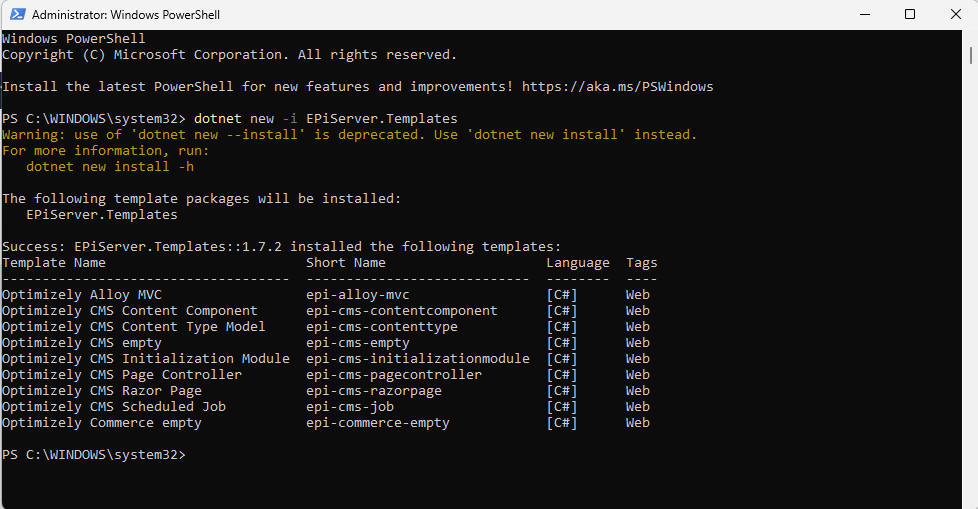
  • Add EpiServer Templates in PowerShell 

dotnet new -i EPiServer.Templates

Optimizely-installation-episerver-cms12-local-machine-10.png

  •  Let’s install Optimizely CLI Tool globally

dotnet tool install EPiServer.Net.Cli –global –add-source https://nuget.optimizely.com/feed/packages.svc/

Optimizely-installation-episerver-cms12-local-machine-11.png

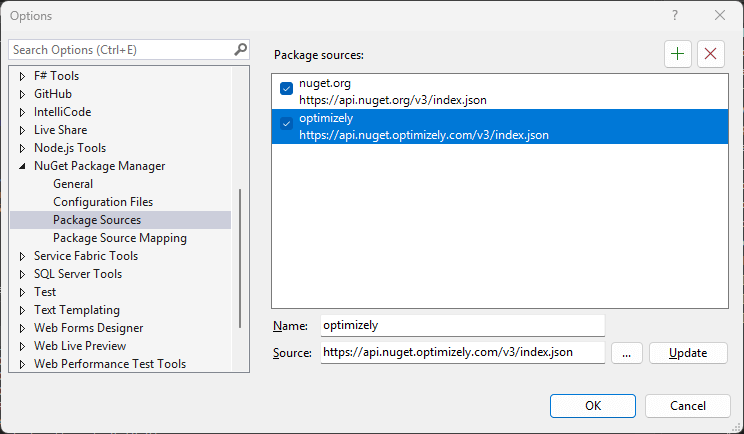
  • In Visual Studio, let’s verify that the Optimizely NuGet source is added via the NuGet Package Manager Solution.

https://api.nuget.optimizely.com/v3/index.json

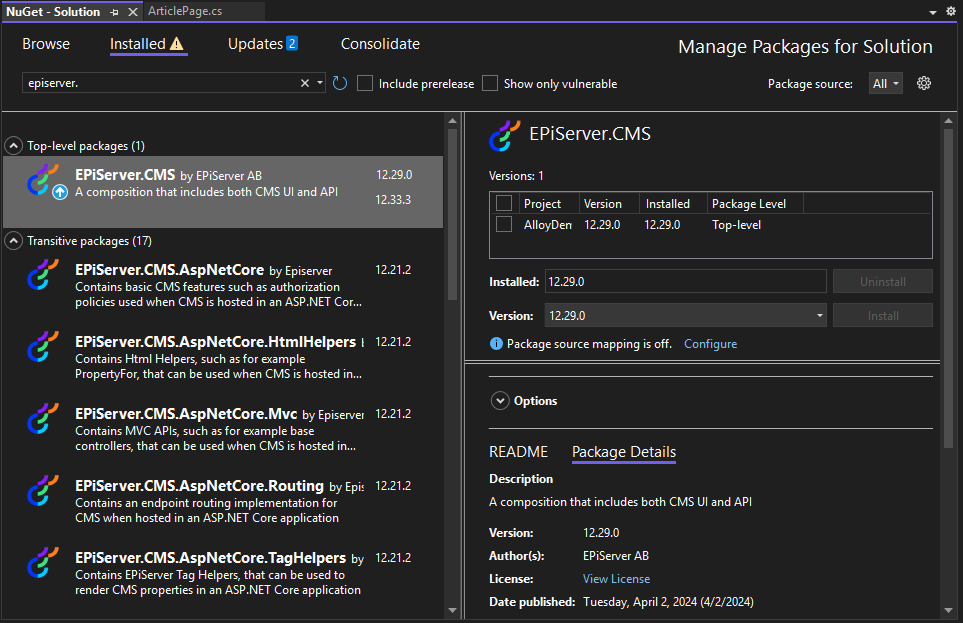
  • Let’s also verify the EpiServer.CMS NuGet package is installed.


Optimizely-installation-episerver-cms12-local-machine-1.png

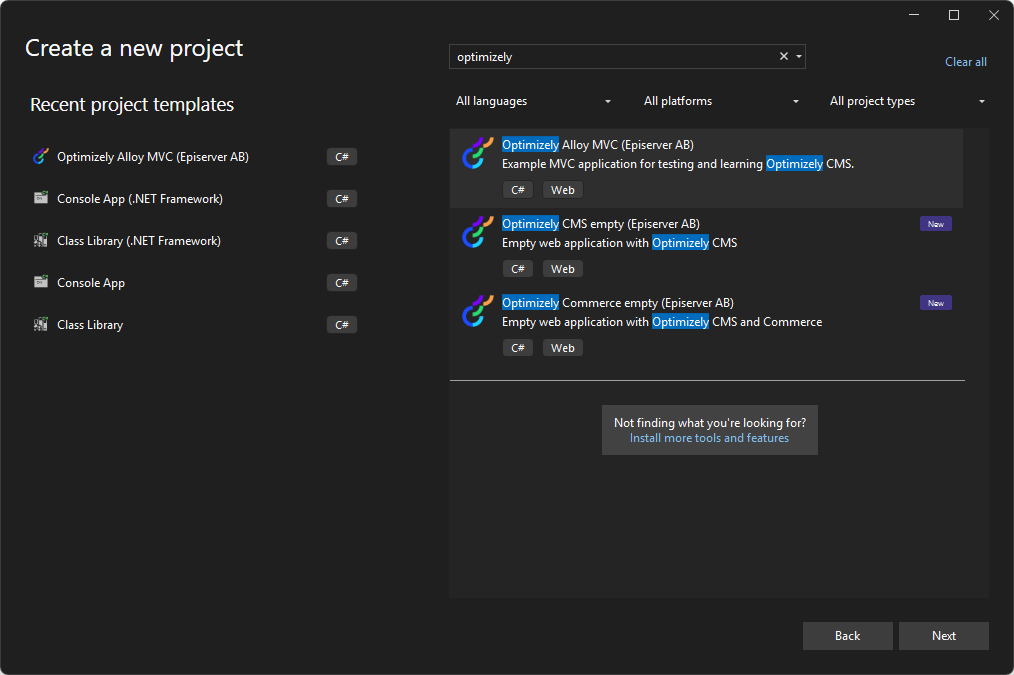
  • Now, let’s create a new project in Visual Studio, which will give three Optimizely base projects to choose from 
    • Optimizely Alloy MVC 
    • Optimizely CMS empty
    • Optimizely Commerce empty

Optimizely-installation-episerver-cms12-local-machine-2.png

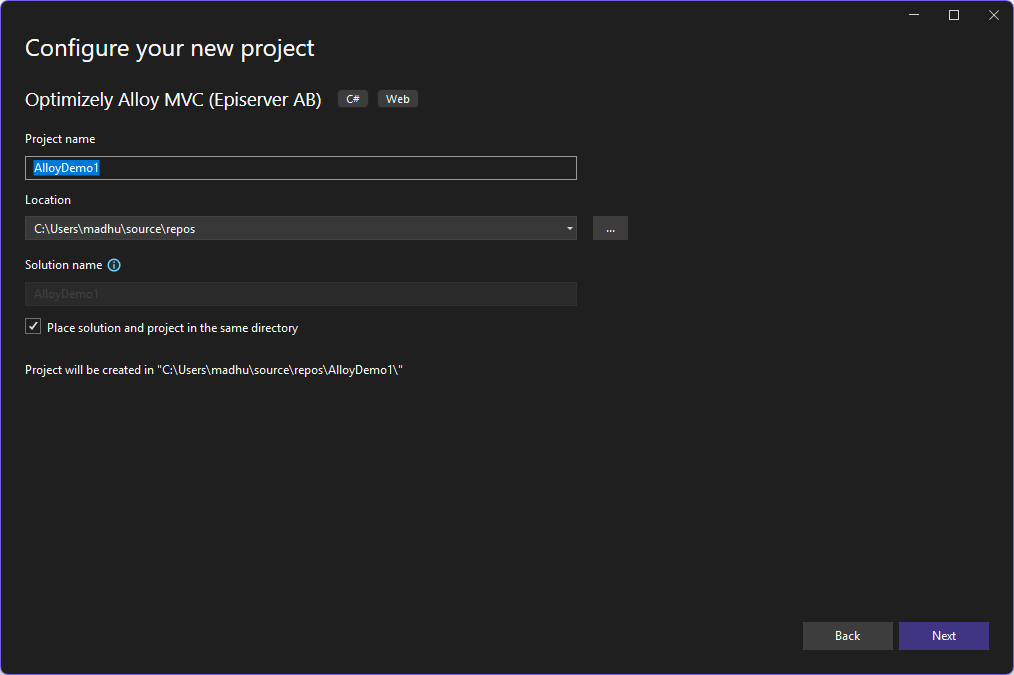
  • I chose Optimizely Alloy MVC, which is a starter kit for new developers to explore.
  • Named it – AlloyDemo1 project.

Optimizely-installation-episerver-cms12-local-machine-3-1.png

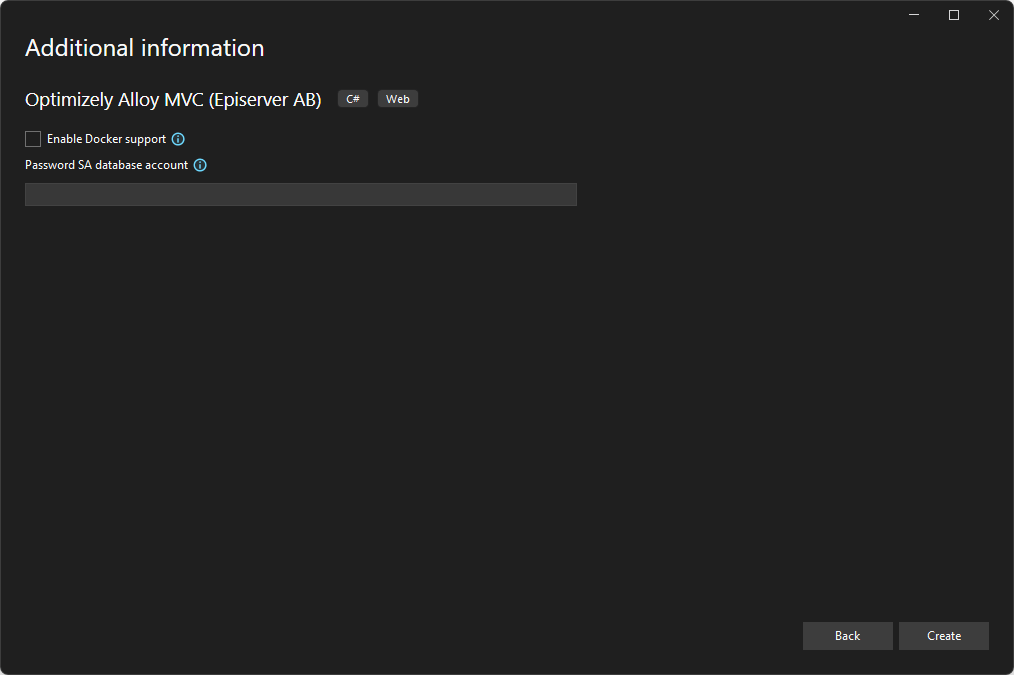
  • Provide the SQL admin SA account password since it creates the databases as part of the project in MDF and LDF files.

Optimizely-installation-episerver-cms12-local-machine-4.png

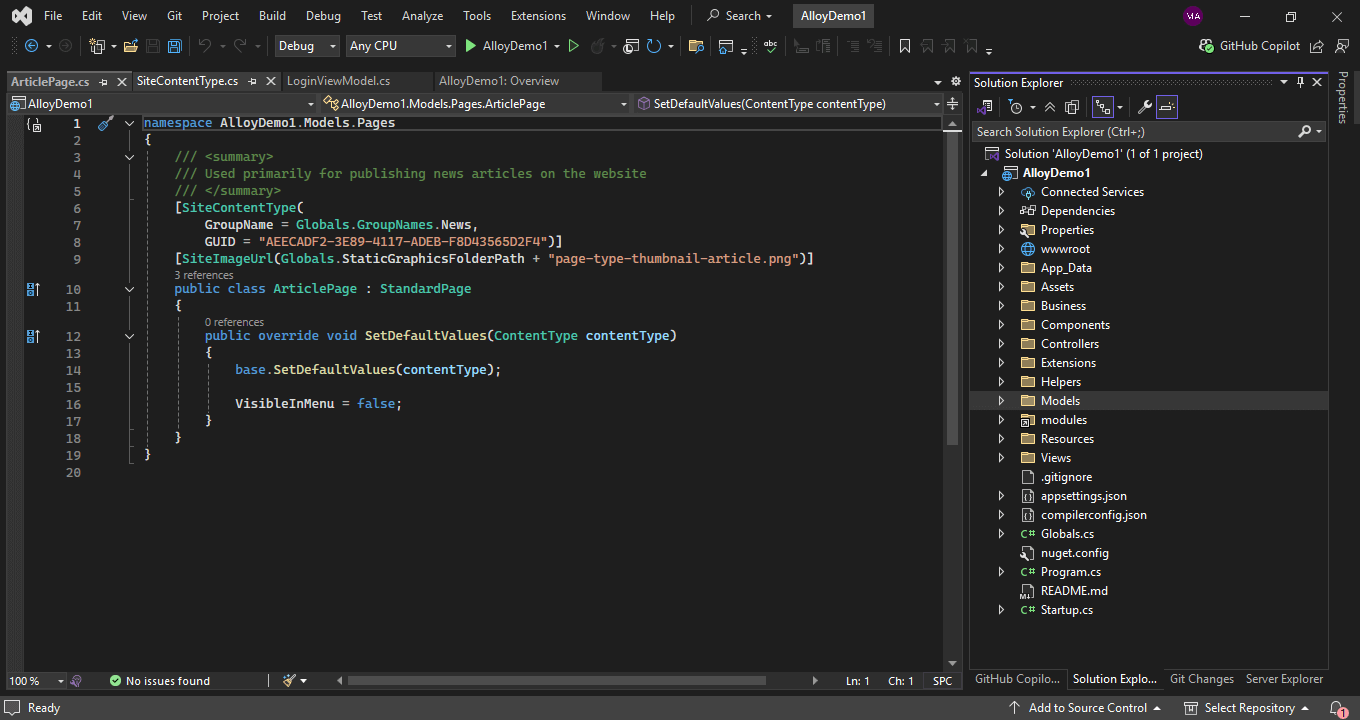
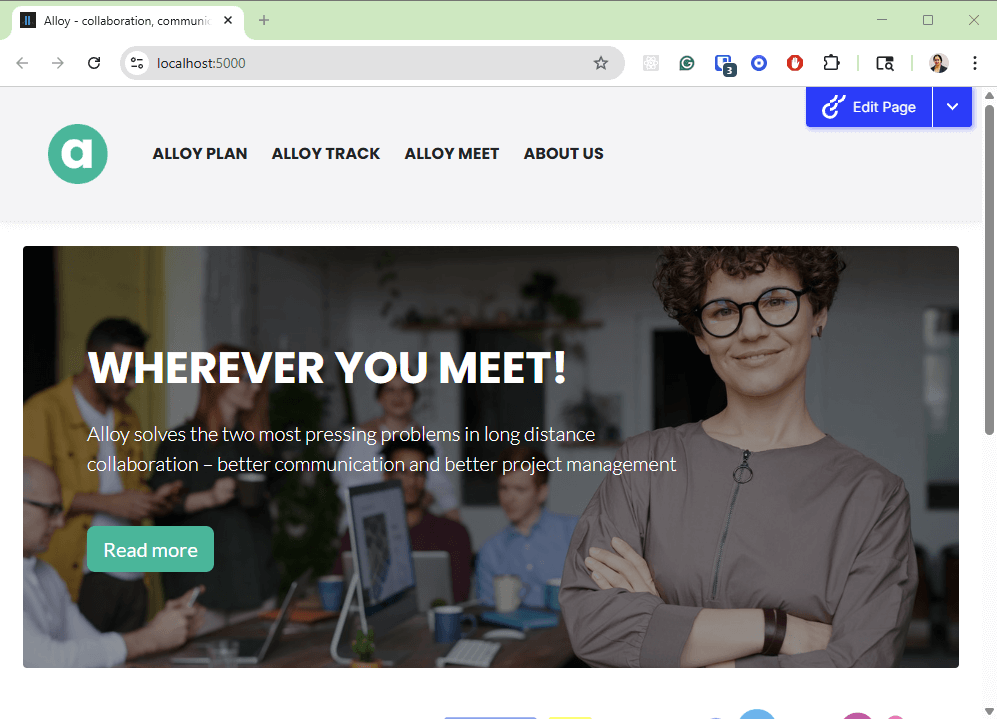
  • The new Optimizely solution is ready to explore!

Optimizely-installation-episerver-cms12-local-machine-5.png

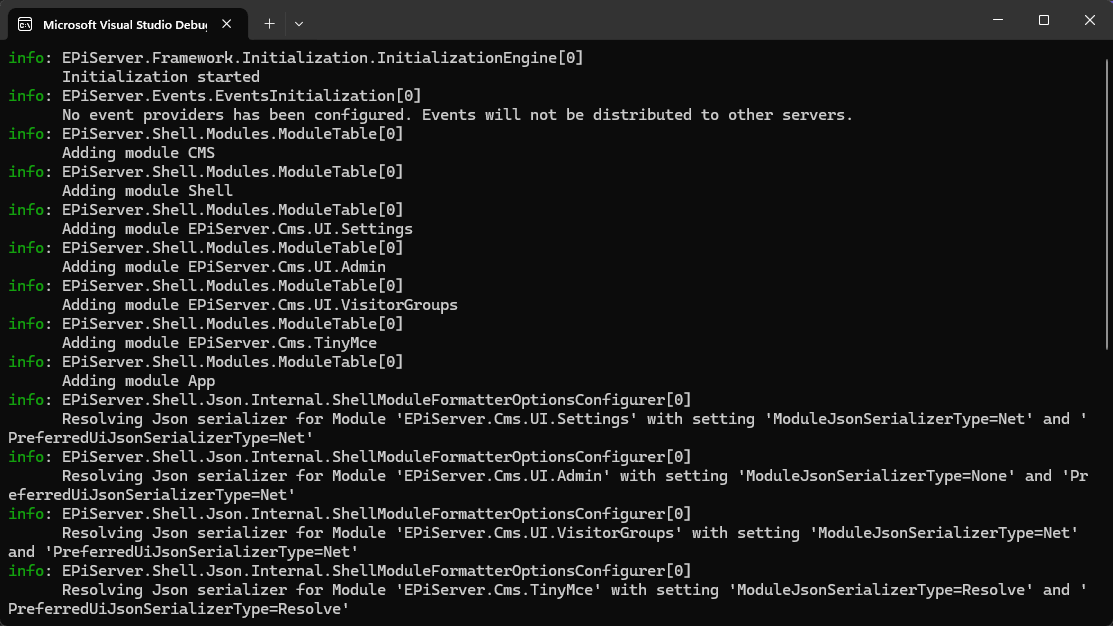
  • To run the localhost, we just need to start the IISExpress AlloyDemo1 project, which runs cmd prompt to initialize commands.

Optimizely-installation-episerver-cms12-local-machine-6.png

Optimizely-installation-episerver-cms12-local-machine-7.png

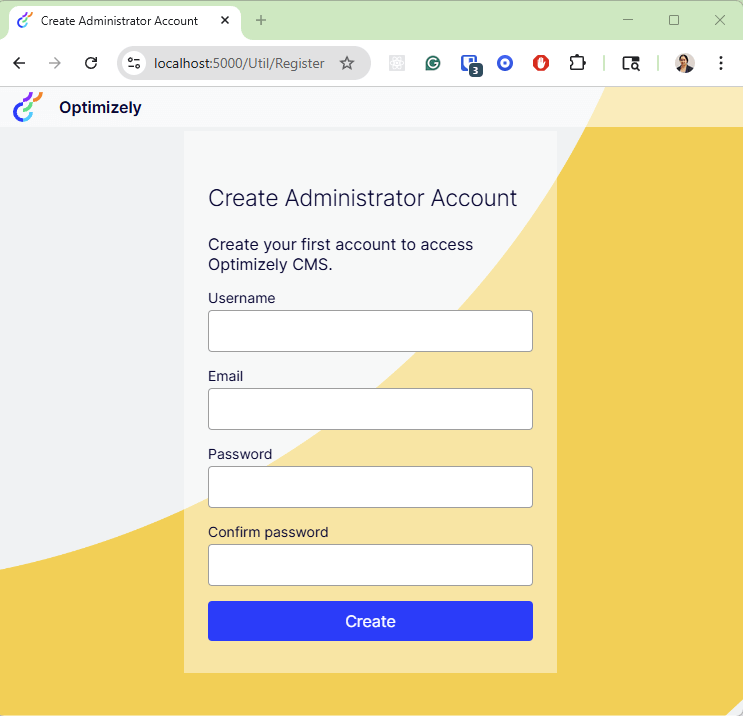
  • Register the admin account with credentials and explore the new local instance of Optimizely.

NOTE: There is no license required for running on localhost or domainname.local. Yay!

If you prefer watching a video, my quick recording –

Happy Optimizing!

0